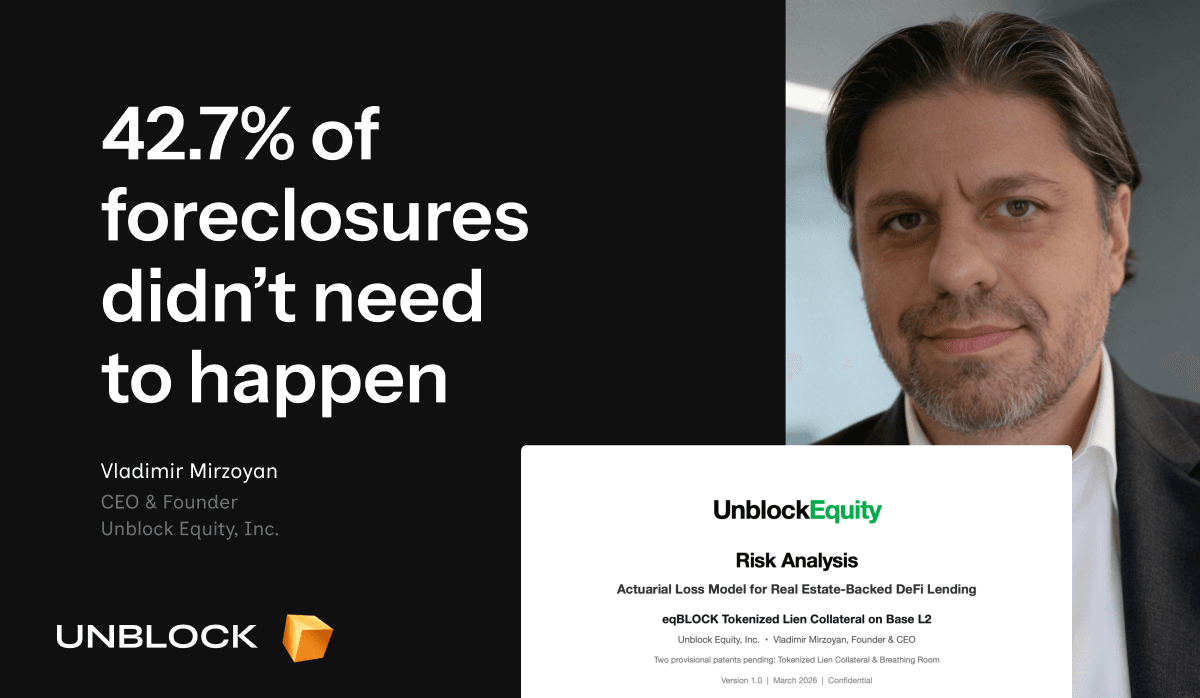
42.7% of Foreclosures Didn't Need to Happen
We analyzed 15 years of Florida foreclosure data and found that nearly half of all foreclosed homeowners had enough equity to save their homes—if anyone had let them access it. Each preventable foreclosure destroys an average of $262,000 in household wealth.
When a homeowner loses their home to foreclosure, the assumption is that they ran out of options. That they were underwater, overextended, or simply couldn't afford to stay. But what if nearly half of them could have stayed—and the system just didn't let them?
That's what our data shows.
The Finding
We analyzed foreclosure proceedings across Florida using ATTOM property data, cross-referenced with Case-Shiller home price indices, Freddie Mac loan-level data, and MBA delinquency surveys. Our methodology was straightforward: for each foreclosed property, we asked a simple question—did this homeowner have enough equity above their mortgage to cover their arrears and 6–12 months of payments?
42.7%
of Florida foreclosures between 2010–2025 involved homeowners with 20%+ equity—enough to fund their own recovery through an equity access product like Breathing Room.
These weren't underwater homeowners. They had real wealth locked inside their properties. In many cases, six figures of equity. And they lost their homes anyway, because no lending product existed for someone with a late payment on their record.
$262,000 in Destroyed Wealth Per Foreclosure
Foreclosure doesn't just transfer wealth—it destroys it. When a property goes through Florida's judicial foreclosure process (which averages 28 months from first missed payment to REO sale), here's what happens:
Add it up: the average preventable foreclosure destroys $262,000 in total household and community wealth. Multiply by the 42.7% that didn't need to happen, and the scale of the problem becomes staggering.
Why Banks Can't Fix This
The 12-month seasoning requirement isn't irrational from a bank's perspective. Traditional HELOC underwriting requires 12 consecutive months of on-time mortgage payments. A homeowner who missed one payment last month is, by definition, disqualified— regardless of how much equity they hold.
This creates a paradox: the homeowner needs money to make their mortgage payments, but they can't access their equity until they've made 12 months of payments. By the time they qualify again, they may have already lost their home.
Banks can't serve this market because their risk models don't have a mechanism for escrowed payment guarantees. They see a delinquent borrower and the underwriting stops there. They don't ask: “What if we could guarantee the next 12 months of payments from the borrower's own equity?”
The Actuarial Model
We built a full actuarial loss model to quantify the risk of lending to this population. The results were better than expected.
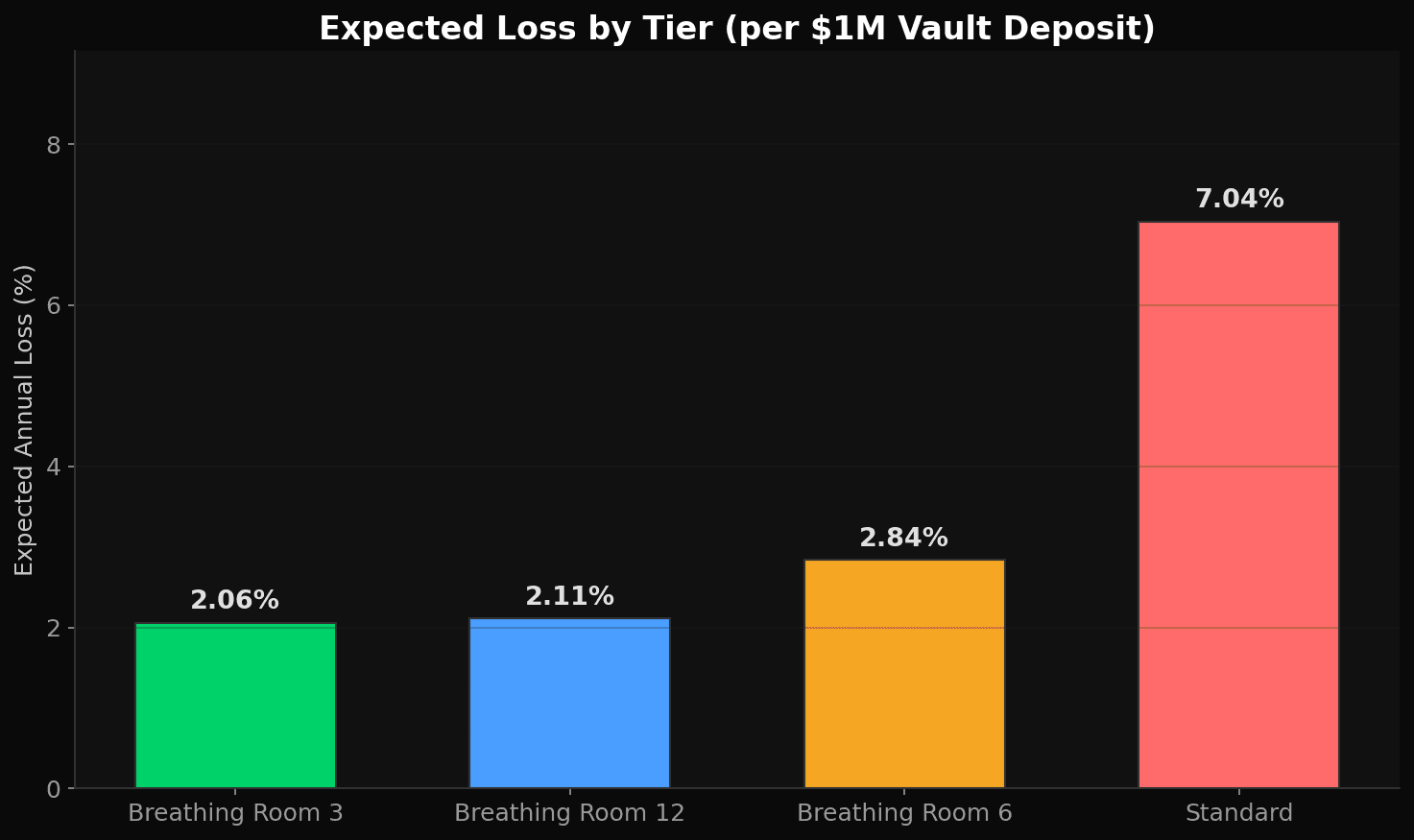
Expected annual loss by product tier. Breathing Room tiers (BR3/BR6/BR12) show significantly lower loss rates than unsecured consumer lending.
The key insight: Breathing Room doesn't just help the homeowner—it actually reduces risk for the capital provider. By escrowing mortgage payments upfront, the borrower is guaranteed to perform throughout the relief period. The 12-month Breathing Room tier (BR12) shows an expected annual loss of just 2.11%, compared to 5–10% for typical unsecured consumer lending.
We stress-tested the model against a 2008-severity scenario— a 49% peak-to-trough decline in Miami home prices—and even in that worst case, the maximum 3-year loss was 8.5%. For context, the S&P 500 lost 57% peak-to-trough during the same period.
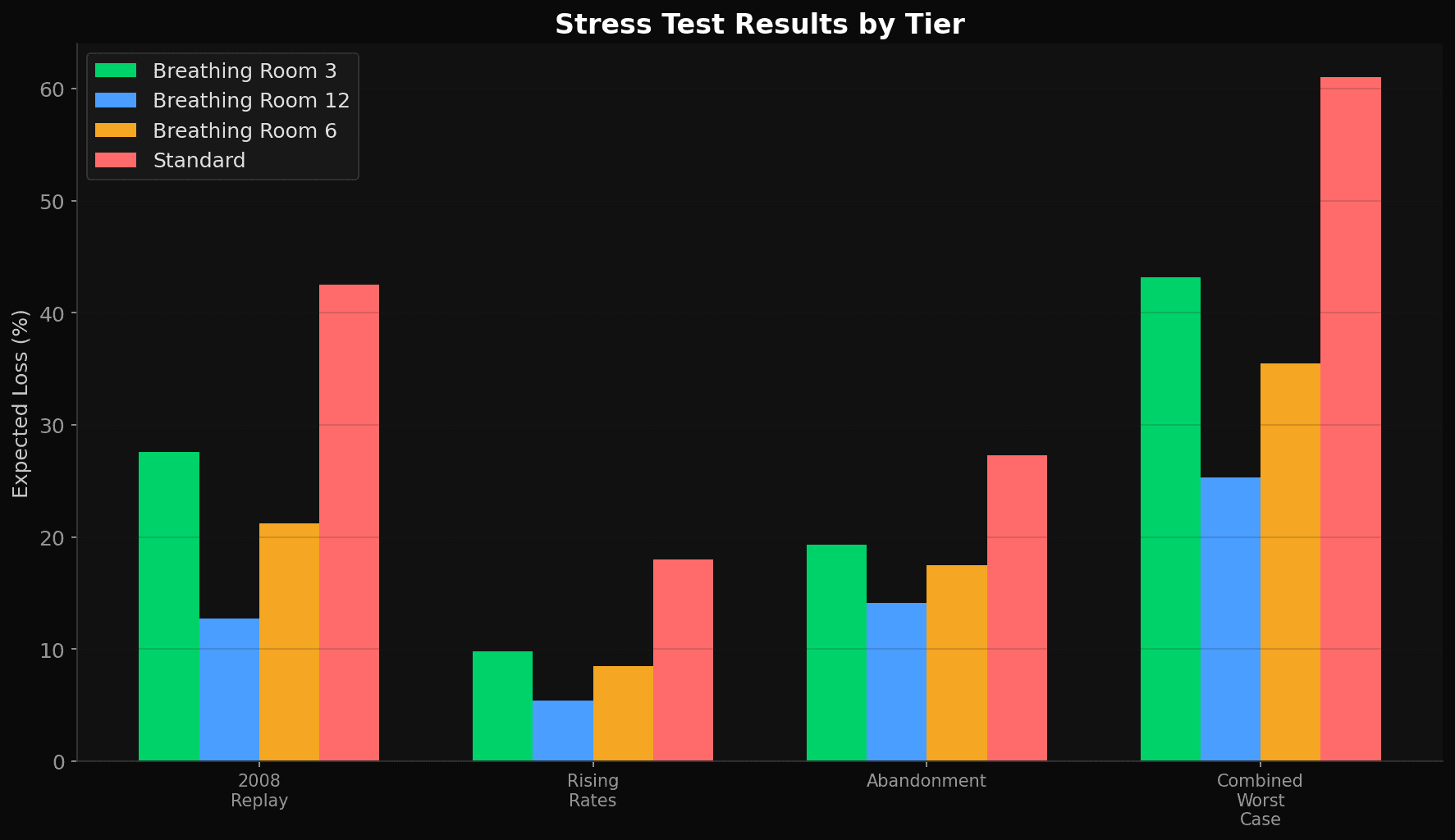
Stress test results: even in 2008-severity scenarios, losses remain bounded by the substantial equity cushion.
How Breathing Room Changes the Equation
The mechanics are simple. A homeowner with $200,000 in equity and $18,000 in arrears borrows against their equity through a voluntary junior lien. Their overdue payments are caught up immediately. Then 6–12 months of future payments are escrowed, flowing automatically to their mortgage servicer each month.
The homeowner gets cash, payment relief, and time. The capital provider gets real estate-backed yield with escrowed payment guarantees. The mortgage servicer gets a performing loan again. Everyone wins because a temporary problem stays temporary.
Highest cure rate (70%). Expected annual loss: 2.11%. Gives homeowners a full year to recover, retrain, or find new employment. Qualifies for traditional HELOC after the relief period.
Balanced tier with 50% cure rate and 1.87% expected loss. Good for homeowners with a clear path to recovery who need a shorter bridge.
Most conservative LTV (45%) with the lowest expected loss at 1.32%. Designed for homeowners who just need a quick catch-up.
What This Means
Every year in Florida, thousands of families lose homes they didn't need to lose. Not because they were irresponsible. Not because they bought too much house. But because the financial system has a 12-month blind spot that no one has bothered to fix.
With AI-driven layoffs accelerating, the job market shifting under people's feet, and mortgage delinquencies rising, this problem is getting worse. The 42.7% will grow.
We believe the solution already exists inside every home—locked in the equity that homeowners built with years of payments. Breathing Room doesn't create new risk. It unlocks existing wealth to prevent unnecessary destruction.
“42.7% of foreclosures didn't need to happen. That's not a statistic—it's families, neighborhoods, and generational wealth that was destroyed for no reason. We built Breathing Room to make sure that number goes to zero.”
Methodology
Our analysis uses public data from the S&P/Case-Shiller Miami-Dade MSA Index (FRED), Freddie Mac Single Family Loan-Level Dataset, MBA National Delinquency Survey, and ATTOM foreclosure data for Miami-Dade County. The full actuarial model, including Monte Carlo simulation and stress testing methodology, is available in our risk analysis whitepaper and actuarial loss model deep-dive.